
A Translator's Anecdote

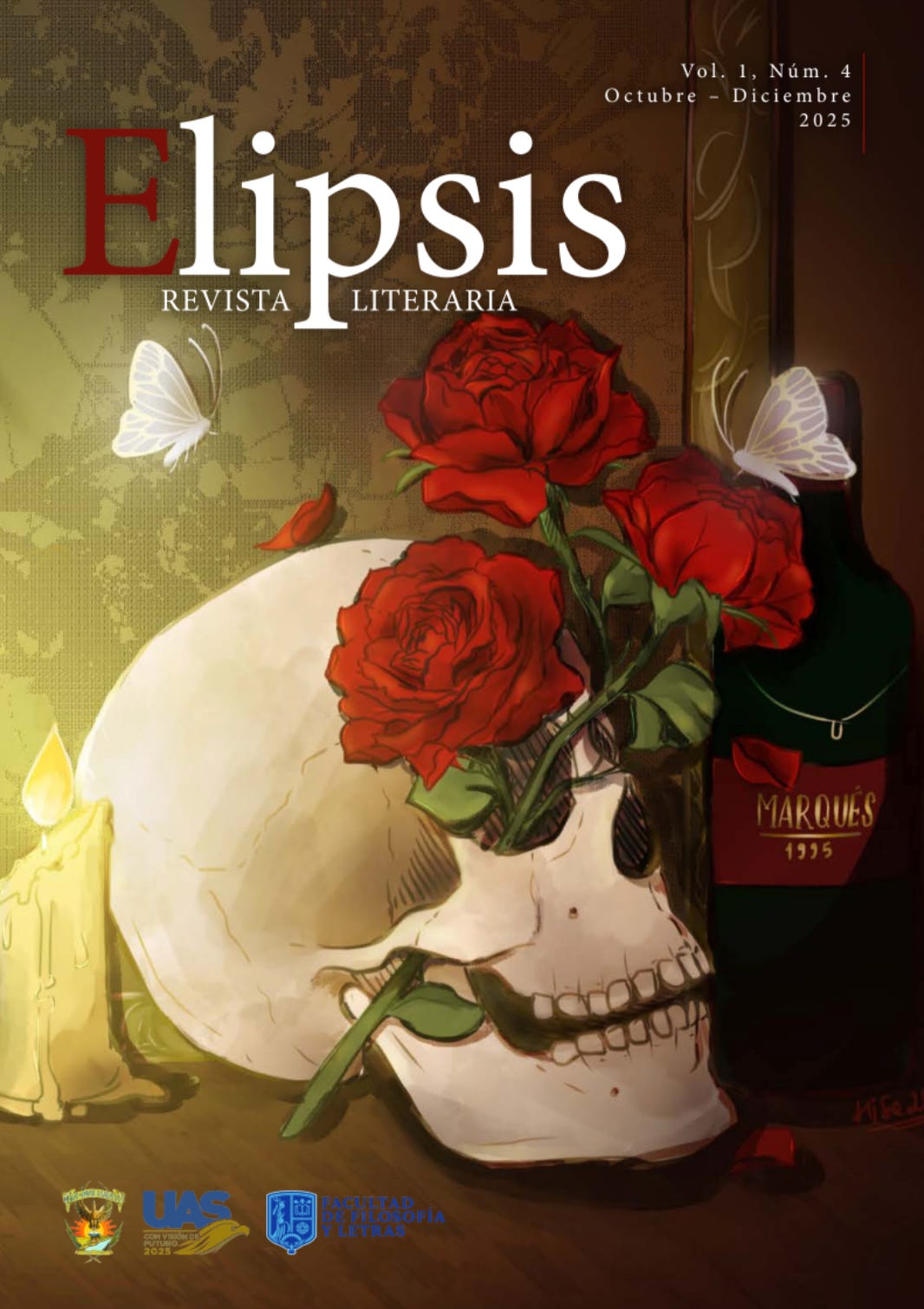
Last week the first Spanish translation of one of my short stories was published in Mexico in Elipsis Revista Literaria, all thanks to my dear friend and Spanish teacher, Roberto Poblete Velázquez.
This is a big moment for me. For one, it’s the first time I get to share my writing with wife’s family in Mexico and our community there in their first language. Secondly, this story, titled “The Fading” in English, was the first I ever published, and so I find it auspicious that it’s also my first to be published in a second language. It’s also a story I love and continue to expand and adapt to new forms. I’m honored that this is now one of them. Lastly, it’s my first collaboration with Roberto, who along with being my pal and professor has become a literary comrade over the years: someone whom I walk the writing path with, commiserating and celebrating along the way.
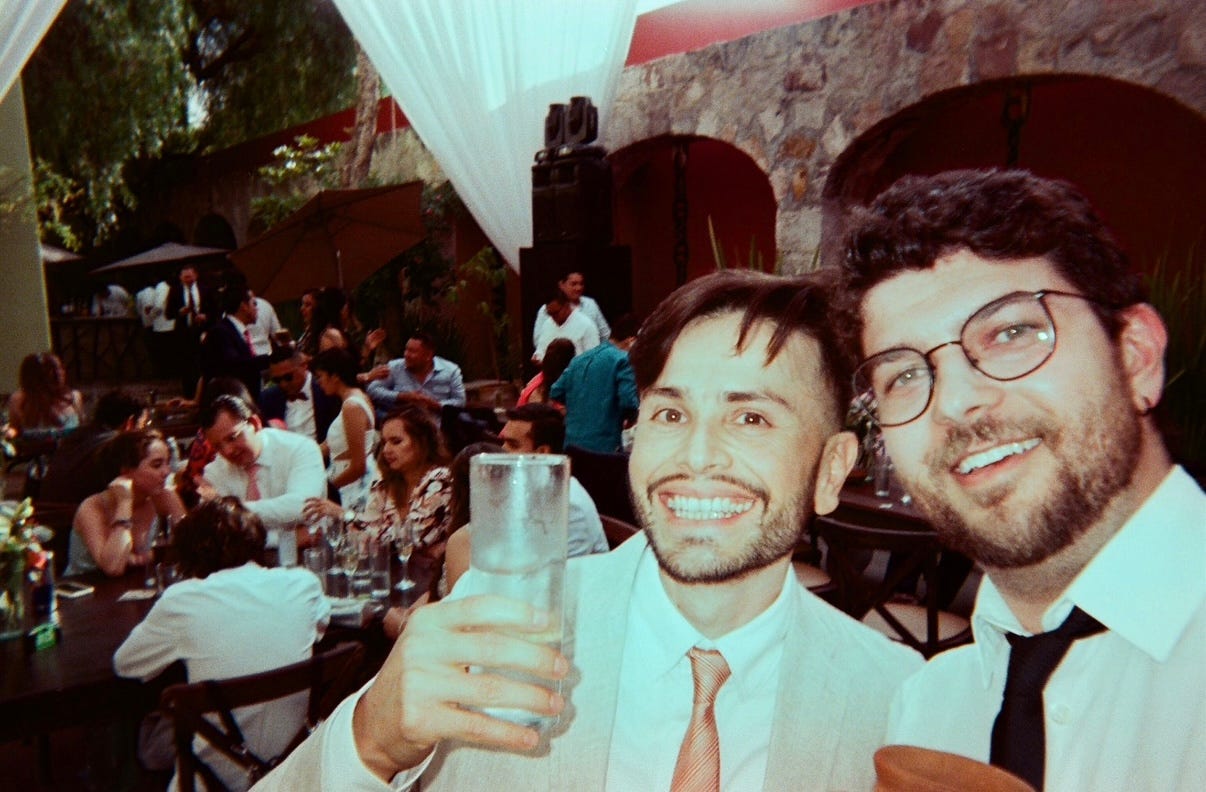
(Roberto and I hitting it it off upon meeting at my sister-in-law’s wedding ↑)
To celebrate the publication of his translation of “The Fading,” I asked if he would contribute a translator’s note to my blog. He came back with what he called, a translator’s anecdote. Rather than a traditional note that delves deep into the weeds of word choice, he wrote on the experience and significance of the project for him.
He shared it with me during our most recent Spanish lesson in which my assignment was to translate it for this post. Though his anecdote says it more eloquently, this process drove home the point: for both of us translation is more than a way to share our work to a wider readership, but to become better writers; “to grapple with,” as Roberto puts it, “history,” “and words,” to “learn” from the process and each other. Being a student of a second language in my adulthood—and, with great fortune, of Roberto—has had a profound influence on my writing, as well as my ability to connect, empathize, and communicate.
(The cover of Elipsis Revista Literaria Núm. 4 ↓)
Most importantly, his anecdote drove home why this project matters most to me: it is, as Roberto says, “un triunfo de la amistad.” It is a record of our connection, of us striving toward empathy and our shared joy in language.
Roberto Poblete Velázquez is a Mexican writer. He recently self-published his first book of essays, Camina con tu perro como un iluminado (2023) and is writing a novel about pre-Hispanic mythology in a 21st century Mexico.
You can read his translation as well as the original via the links below:
«Entumecer» (Roberto’s translation)
“The Fading” (Original publication)
Without further ado, I offer my translation of Roberto’s anecdote, followed by its original.
“The Fading,” a translator’s anecdote
I don’t know how many translators are fortunate enough to experience this rare combination: to discuss the text with the author while also speaking friend to friend. This was the case for the translation of “The Fading.”
I don’t recall when I read this story for the first time, but I know it was the same season that I came to know other texts by Noah Wilson. The atmosphere and emotional texture of this piece filtered slowly through my imagination and thus came the impulse to translate it. When I recall my process of transferring the English to Spanish, it was like putting together a puzzle, but the pieces were not words from dictionaries: they were sounds and concepts that I had to find in my soul, because I already felt them there inside. It seems to me that this is because “The Fading” is a story that speaks of a specific moment, in a particular place, that perhaps comes from concrete experiences, but—above all—dives to a universal depth.
I found some difficulty carrying over to Spanish the cultural particularities, such as the wood bitten by beetles (Beetle Kill Pine) from the proliferation of an invasive species in Colorado, as Noah explained to me. And a personal challenge was to maintain the emotional atmosphere of the story due to its dialectic of loss, but also of relief.
Such is normal in my conversations with Noah: to grapple with the history and the words of this story was a learning process. He helped me to understand the expressions that I didn’t know completely; I even remember a videocall in which the expert fingers of my friend moved through the air to demonstrate playing an upright bass.
Now that this translation of “The Fading” is available it makes me think that, more than a translation, this is a triumph of friendship.
«Entumecer», una nota anecdótica de traducción
No sé cuántos traductores viven la fortuna de esta rara combinación: conversar sobre el texto con el autor y además hablarlo de amigo a amigo. Este fue el caso de la traducción de «Entumecer».
No recuerdo cuándo leí por primera vez este cuento, pero sé que fue en la misma temporada en que conocí otros textos de Noah Wilson. La atmósfera y la textura emocional de esta pieza se filtró lentamente en mi imaginario y después vino el impulso de la traducción. Cuando recuerdo el transvase del inglés al español, es como recordar el armado de un rompecabezas y las piezas no eran palabras de los diccionarios: eran sonidos y significados que tuve que buscar en mi alma, porque ya estaban aquí adentro. Me parece que esto es así porque «Entumecer» es un cuento que habla de un momento específico, en un lugar particular, que tal vez viene de experiencias muy concretas, pero que —sobre todo— se sumerge hasta una profundidad universal.
Encontré algunas dificultades para llevar al español particularidades culturales: la madera mordida por los escarabajos, de aquella proliferación de una especie invasora en Colorado, como me contó Noah. Un reto personal fue mantener la atmósfera emocional del cuento porque tiene una dialéctica muy interesante de pérdida, pero también de un alivio.
Como es normal en mis conversaciones con Noah, entender la historia y las palabras de este cuento fue un proceso de aprendizaje. Me ayudó a entender las expresiones que no entendía por completo; incluso recuerdo en una videollamada los dedos expertos de mi amigos moviéndose en aire, para ejemplificar algo acerca de la ejecución del bajo.
El que «Entumecer» esté ahora disponible me hace pensar en que más que una traducción, es un triunfo de la amistad.
I love this for you, Noah! I'm so glad you've begun to feel the joys of understanding the world through other languages.